Serengeti National Park is a globally iconic wildlife sanctuary, renowned for the annual Great Migration. This epic event involves over 1.5 million wildebeests, accompanied by hundreds of thousands of zebras and gazelles, as they journey across the plains in search of greener pastures. The migration is a dramatic cycle of life and death, as the animals face numerous dangers, including river crossings filled with crocodiles and predators like lions and hyenas that follow the herds.
Beyond the migration, the Serengeti’s diverse landscapes—ranging from endless savannahs to riverine forests—are home to the Big Five (lions, leopards, elephants, rhinos, and buffalo) and a wide variety of other species. The park’s name, meaning “endless plains” in Maasai, reflects its vast, open horizons. As a UNESCO World Heritage Site, Serengeti National Park offers some of the most spectacular wildlife viewing experiences in the world.
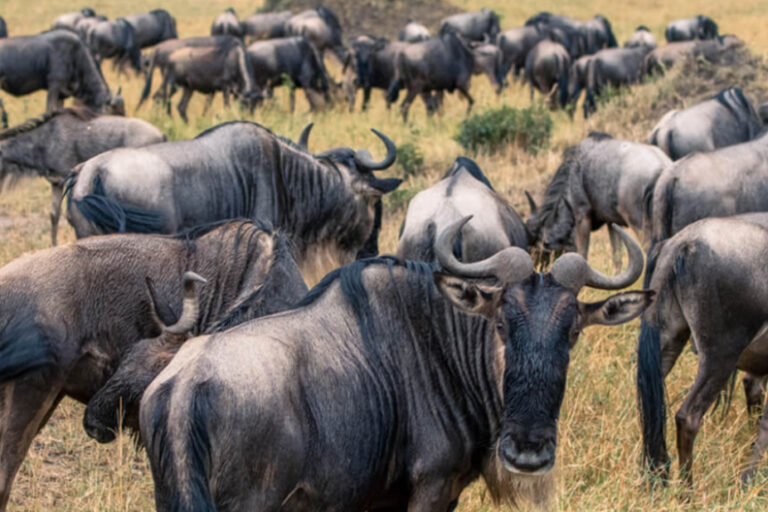
Wildebeest migrate within the Serengeti-Mara ecosystem in response to seasonal rainfall and the search for fresh grazing. Driven by water and nutrient-rich grass, they follow a circular route spanning Tanzania and Kenya. Predation, breeding needs, and ecological cycles also influence their movement, ensuring survival of the species across regions.
NDUTU
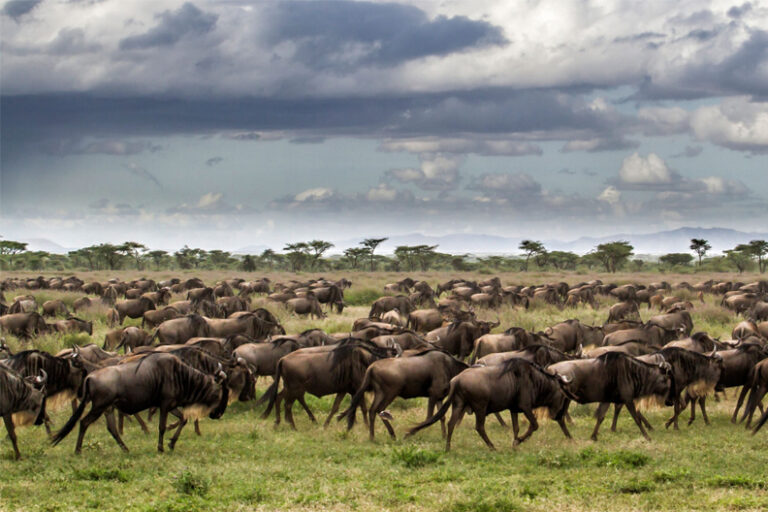
The Ndutu region, located in the southern part of the Serengeti ecosystem and within the Ngorongoro Conservation Area, is a key site in the annual Great Wildebeest Migration. Each year, from December to March, over 1.5 million wildebeests, accompanied by zebras and gazelles, gather in the short-grass plains of southern Serengeti to give birth. The area encompasses Lake Ndutu, Lake Maseki, and surrounding woodlands and plains, offering a rich and diverse habitat that supports a dramatic stage of this natural event.
Southern Serengeti’s ecosystem includes Ndutu, the plains of Kusini, Maswa Game Reserve to the southwest, the Ngorongoro Highlands to the east, and parts of the Matiti and Salei plains to the south. These regions provide seasonal water, fertile volcanic soils, and nutrient-rich grasses that make this part of the Serengeti ideal for calving. Nearly half a million wildebeest calves are born during a short six-week period starting in late January, a strategy that helps overwhelm predators such as lions, cheetahs, hyenas, and leopards.
This period is crucial not only for the survival of the next wildebeest generation but also for maintaining the ecological balance of the Serengeti. Predators rely heavily on this influx of vulnerable prey to sustain their populations. The open terrain also allows for exceptional wildlife viewing and predator-prey interactions.
As the rains end around March, the herds begin their migration northward, moving through central Serengeti, the Grumeti region, and eventually toward Kenya’s Maasai Mara. This continuous movement maintains the health of the grasslands and connects various protected areas, making the Serengeti-Mara ecosystem one of the most intact and dynamic wildlife corridors in the world.
Ndutu remains a prime location for observing the raw beauty and rhythms of Africa’s greatest wildlife migration.
THE WESTERN SERENGETI
The wildebeest migration typically occur in this area between May to mid-June or beginning of July though we can’t guarantee. During this time, the herds gather in massive numbers near the Grumeti River. This region offers rich grazing after the long rains, attracting hundreds of thousands of wildebeest, accompanied by zebras and gazelles. A major challenge in this area is crossing the Grumeti River, where the volume of water and the large Nile crocodiles lie in wait. These dramatic crossings are dangerous but necessary for reaching greener pastures. The western corridor also has abundant of big cats to spot and provides mating opportunities, as many wildebeest breed during this phase, ensuring the cycle of migration continues across the ecosystem.
NORTHERN SERENGETI MARA RIVER CROSSING:
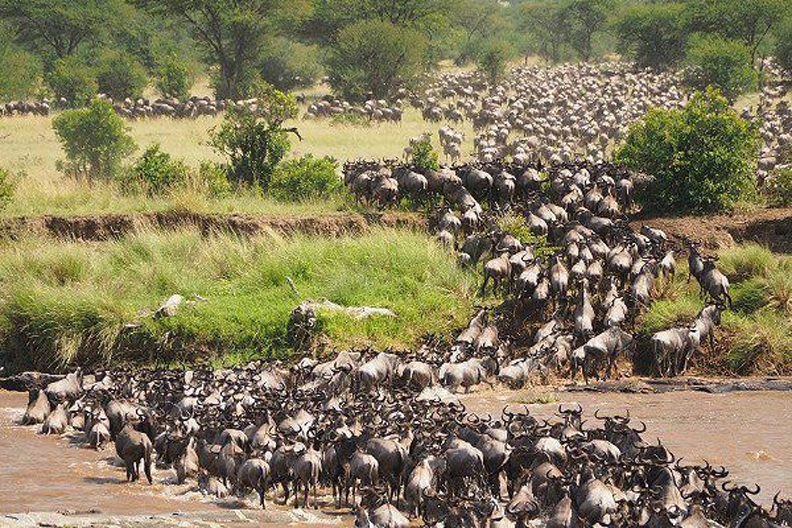
The Mara River crossing is one of the most thrilling and perilous events of the Serengeti’s Great Migration. Every year, over 1.5 million wildebeests, along with zebras, must cross the crocodile-infested waters of the Mara River, located in the Northern Serengeti Tanzania. This crossing is a critical point in their journey, as the herds move from the Serengeti to the Maasai Mara in search of fresh grazing lands and water.
The spectacle is filled with intense drama—thousands of animals plunge into the river, facing strong currents, steep banks, and the lurking danger of Nile crocodiles. Many do not survive, but those that do continue their epic migration, driven by ancient instincts. The Mara River crossing is a key highlight of the Great Migration, offering one of nature’s most awe-inspiring displays of survival and determination within the Serengeti Mara Ecosystem.
NORTH EAST AND EASTERN SERENGETI:
Between October and January, wildebeests move from north to the northeast though Nyamalumbwa and eastern Serengeti, drawn by short rains and fresh grazing. These regions, including areas like Loliondo and the Gol Mountains, due to Oldonyo Lengai mountain ash threw into the area offer nutrient-rich grasslands ideal for feeding. As the herds move from the northern Serengeti and Maasai Mara, they spread across the plains in vast numbers. This is a time of intense movement before calving begins later in the southern plains. Predators such as lions, leopards, and cheetahs follow closely, taking advantage of the density of prey. The
Migration in these areas reflects the wildebeests’ instinctive response to rainfall and food availability.
Witnessing the wildebeest migration in Serengeti National Park is an unforgettable experience—nature’s grandest spectacle unfolding before your eyes. From thundering hooves to dramatic predator encounters, every moment is filled with raw beauty and awe. The sheer scale of movement, synchronized with the rhythm of the seasons, showcases the Serengeti’s unmatched ecological wonders. For wildlife enthusiasts, photographers, and adventurers alike, this is a once-in-a-lifetime opportunity to connect with nature at its most wild and magnificent. The Serengeti truly delivers magic.


 German
  English
  Chinese
  Dutch
Dutch  French
  Russian